


Measuring made easy
How to take your body measurements correctly
For many RIMO garments, you can choose standard sizes, lengths and details directly in the webshop. If additional measurements are needed, this guide helps you measure bust/chest, waist, hips, sleeve length, leg length, neck or head circumference accurately.

Preparation
Before measuring
Many measuring errors do not happen when reading the tape measure, but because of posture, clothing or a tape measure that has slipped out of position.
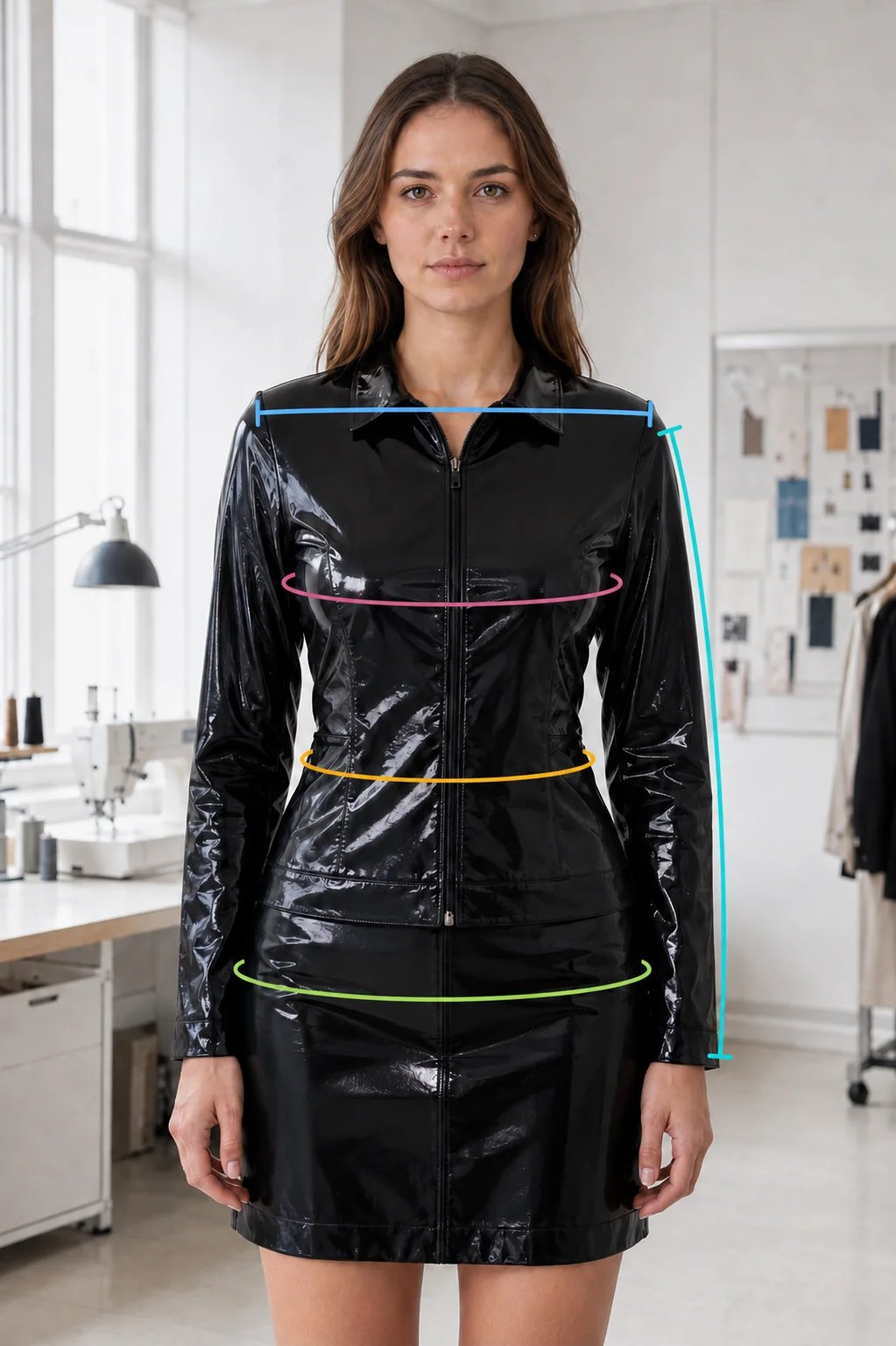
Upper body & arms
How to recognise circumference and length measurements
The lines in the image show the measuring direction. Circumference measurements run around the body; length measurements are taken from one point to another.
Bust / chest circumference
Measure horizontally around the fullest part of the bust or chest. The tape measure runs under the arms and across the shoulder blades.
- Let your arms hang relaxed.
- Do not take a deep breath or tense the chest.
Waist circumference
Measure around the narrowest part of the upper body, usually slightly above the navel.
- Do not suck in your stomach.
- Important for fitted garments.
Hip circumference
Measure horizontally around the fullest part of the seat and hips.
- Stand with your feet about hip-width apart.
- Make sure the tape measure does not slip down at the back.
Shoulder width
Measure from shoulder point to shoulder point across the upper back.
- The shoulder points are where the arm and shoulder meet.
Sleeve length
Measure from the shoulder point over the slightly bent elbow down to the wrist.
- Do not stretch the arm completely straight.
Upper arm circumference
Measure around the fullest part of the upper arm.
- Helpful for strong upper arms or close-fitting sleeves.
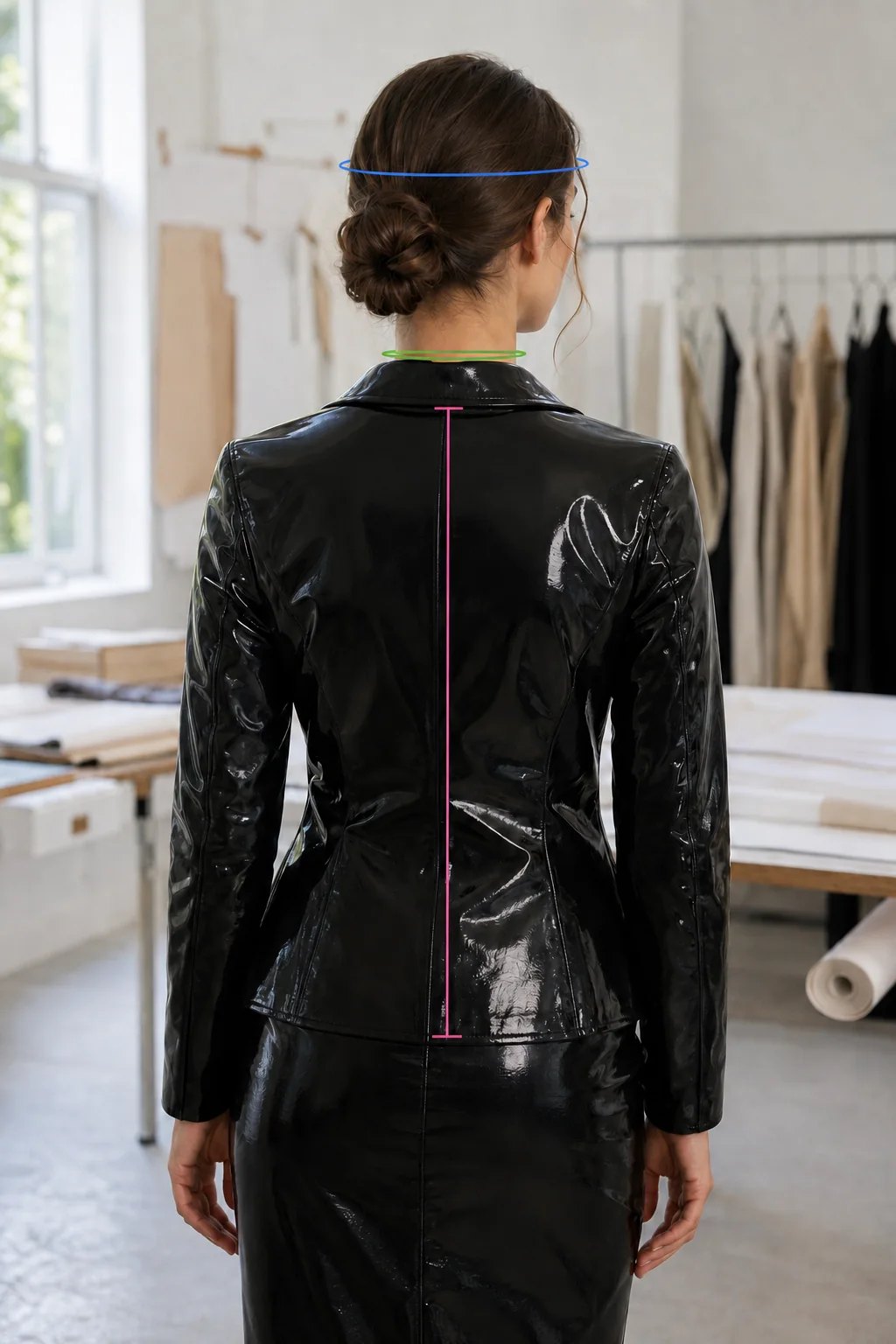
Neck, head & back
Measurements for collars, hoods and back length
These measurements are especially useful for high collars, hoods, caps and the desired back or coat length.
Neck circumference
Measure loosely around the base of the neck, where a collar would sit.
- One finger of ease under the tape measure is usually sensible.
- Important for high collars and hoods.
Head circumference
Measure horizontally around the widest part of the head, usually just above the eyebrows and around the back of the head.
- The tape measure should not run at an angle.
Back length
Measure vertically down the centre back from the collar attachment seam to the desired length.
- For jackets, measure to the desired hem position.
- For coats, also note the desired total length.
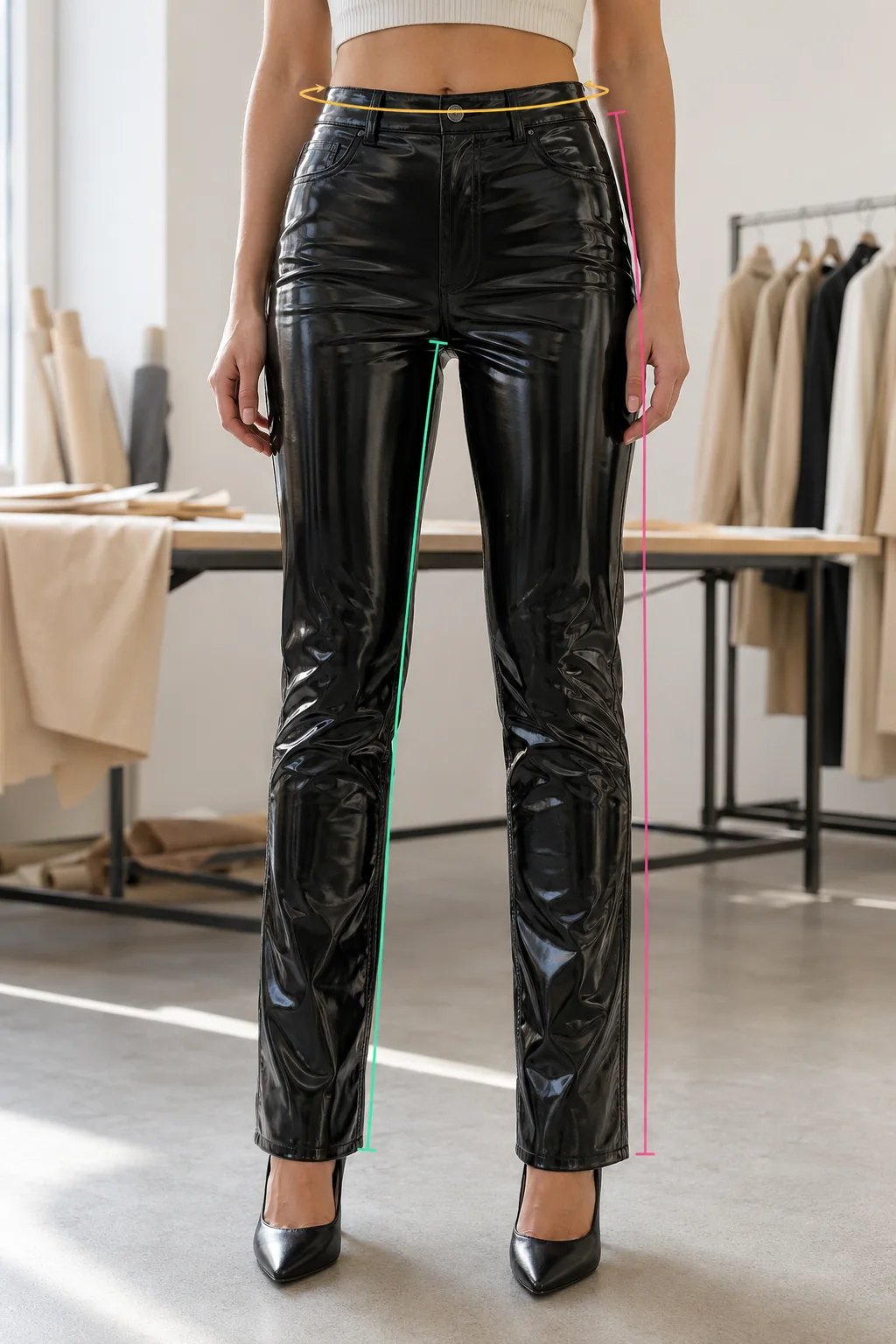
Trousers & lower body
How to measure waistband, inseam and outseam
For trousers, overalls and long garments, these measurements are important for fit, length and freedom of movement.
Waistband circumference
Measure around the place where the trouser waistband should sit.
- Do not automatically measure the narrowest waist if the trousers should sit lower.
Inseam length
Measure along the inside of the leg from the crotch to the floor or to the desired trouser length.
- Measure barefoot or with the shoes you plan to wear.
Outseam length
Measure down the outside of the leg from the waist or desired waistband position to the hem.
- Stand straight and distribute your weight evenly.
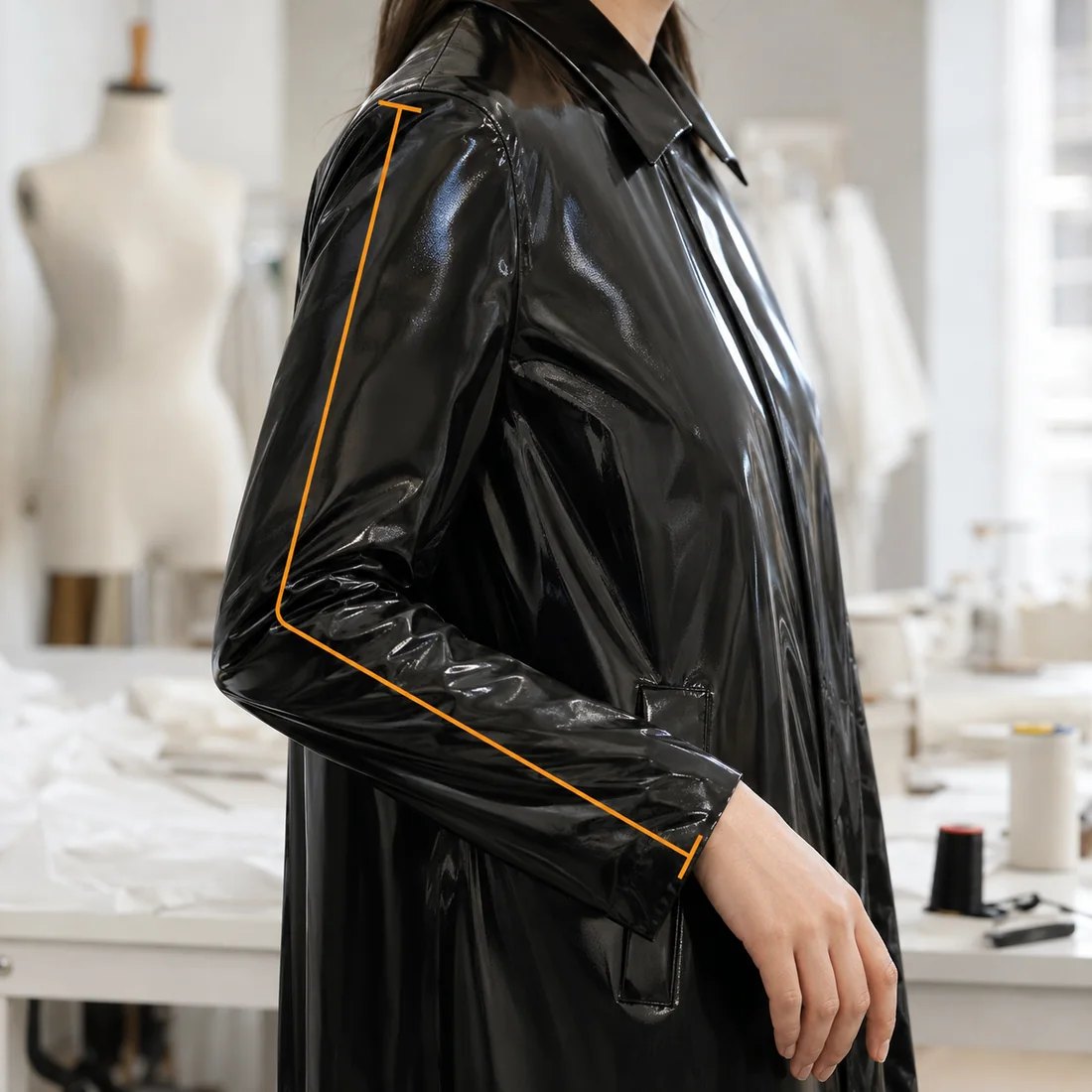
Detail measurement
Sleeve length: do not measure with the arm completely straight
For jackets, coats and blouses, sleeve length is more realistic when the arm is slightly bent. This helps ensure enough freedom of movement later, without making the sleeve appear too short.
- The starting point is the shoulder point.
- The measurement runs over the elbow.
- The endpoint is the wrist or the desired sleeve hem position.
Orientation
Which measurements are needed for which garment?
Not every measurement is needed for every order. This overview shows which details are typically most helpful for different types of garments.
| Garment | Important basic measurements | Additionally helpful |
|---|---|---|
| Coats, jackets, parkas | Bust/chest, waist, hips, shoulder width, sleeve length, back or total length | Upper arm circumference, neck circumference, desired hem length |
| Capes, ponchos, cloaks | Body height, desired length, neck circumference | Bust/chest circumference and shoulder width if the fit should be adjusted more precisely |
| Trousers | Waistband, hips, inseam length, outseam length | Thigh circumference, desired leg width, preferred waistband height |
| Hoods, caps, headwear | Head circumference, neck circumference | Desired ease, hairstyle or additional head covering worn underneath |
Unsure about a measurement?
It is better to ask once than to correct later.
For made-to-measure orders, we will contact you after ordering if information is missing or seems unclear. If you are between two sizes or unsure about a measurement, simply add a short note in the comment field of your order.
Frequently asked questions about measuring
A few questions come up again and again when taking measurements. Here are the most important answers in brief.
Should I measure tightly or loosely?
The tape measure should sit close to the body, but it should not cut in. For circumference measurements, one finger should usually fit comfortably under the tape.
Can I take measurements from existing clothing?
For some details, a well-fitting garment can be helpful. However, body measurements and garment measurements are not the same. Please tell us if a measurement was taken from a garment.
What should I do if I am between two sizes?
Choose the size according to the desired fit and the intended use. If you are unsure, you can contact us before placing your order.
Do I need all measurements for every order?
No. For standard sizes, the information in the configurator is often sufficient. Additional measurements are mainly needed for custom-made garments or when the fit should be adjusted more precisely.